
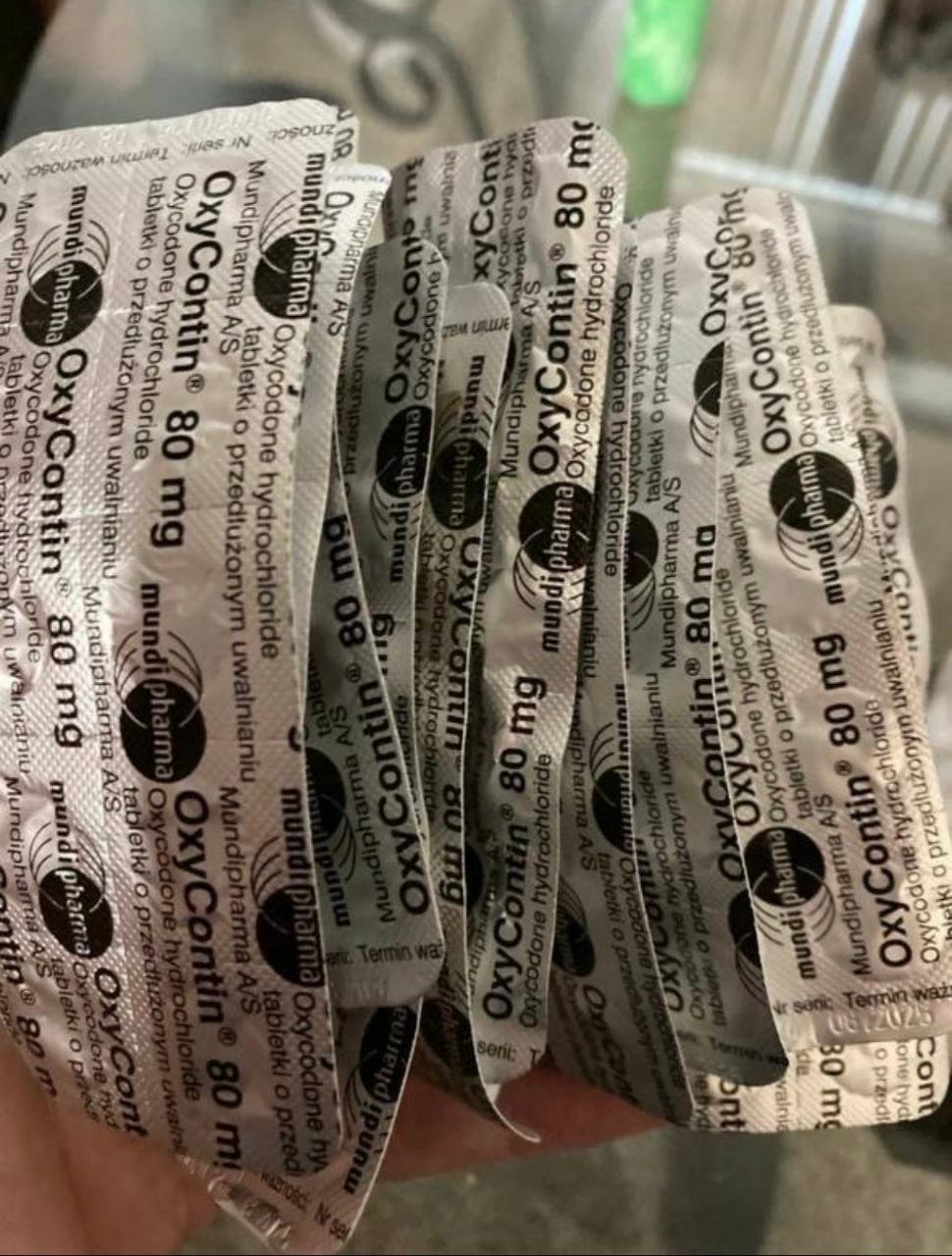
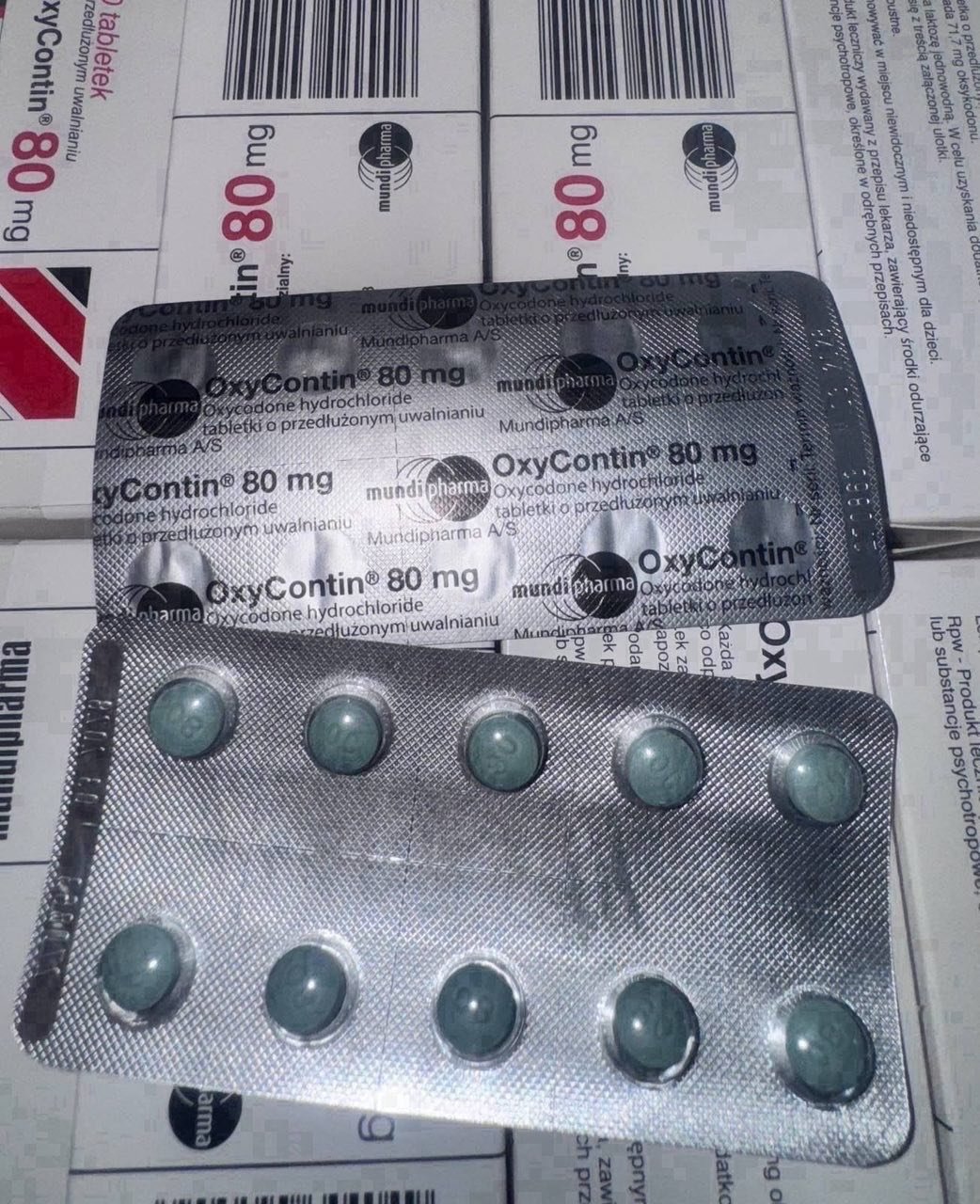
OxyContin 80mg
OXYContin 80mg is a high-strength extended-release opioid that requires careful patient selection and medical monitoring.
OXYContin 80mg: Product Information, Uses, and Safety
OXYContin 80mg contains oxycodone hydrochloride, an extended-release opioid analgesic. It is designed to provide prolonged pain relief and is intended only for patients for whom a healthcare professional determines that an extended-release opioid is appropriate. OXYContin is a prescription Schedule II controlled substance and carries significant risks that require careful medical supervision.
What Is OXYContin 80mg?
OXYContin is the brand name for an extended-release formulation of oxycodone hydrochloride. Unlike immediate-release oxycodone products, OXYContin is formulated for extended release and is not intended to be used as an as-needed pain medicine.
The current FDA labeling states that OXYContin is indicated for severe and persistent pain requiring an opioid analgesic when alternative treatment options are inadequate. It is not intended for occasional or PRN pain relief.
Key Product Information
| Feature | Information |
|---|---|
| Brand | OXYContin |
| Active ingredient | Oxycodone hydrochloride |
| Form | Extended-release tablet |
| Strength | 80 mg |
| Drug class | Opioid analgesic |
| Prescription status | Schedule II controlled substance in the U.S. |
| Administration | Oral |
| Intended use | Severe and persistent pain when appropriately prescribed |
| Release type | Extended release |
OXYContin 80mg and Opioid Tolerance
The 80mg strength is particularly important from a safety perspective. According to the current FDA prescribing information, OXYContin 60mg and 80mg tablets, single doses above 40mg, and total daily doses above 80mg are restricted to patients who have established tolerance to an opioid of comparable potency.
The FDA defines opioid tolerance using established exposure to specified opioid doses for at least one week. This is one reason OXYContin 80mg should never be selected or adjusted without professional medical supervision.
Why Opioid Tolerance Matters
Taking a high-strength extended-release opioid without established tolerance can substantially increase the risk of respiratory depression and overdose. The strength of a tablet should therefore never be interpreted as an indication that it is appropriate for a particular patient.
Important Safety Information
OXYContin carries a boxed warning concerning addiction, abuse, misuse, and potentially life-threatening respiratory depression. These risks can occur even when an opioid is prescribed and used according to medical directions.
Important safety points include:
- Take OXYContin only exactly as prescribed.
- Do not share prescription opioid medication with another person.
- Keep the medication secured away from children and other individuals.
- Never change the dose without speaking with the prescribing healthcare professional.
- Extended-release tablets must be swallowed intact.
- Do not cut, break, chew, crush, or dissolve OXYContin tablets.
- Seek emergency medical assistance for signs of a serious overdose.
- Discuss naloxone availability with a healthcare professional when appropriate.
The FDA specifically warns that altering an OXYContin tablet can expose a person to a potentially fatal amount of oxycodone.
OXYContin 80mg Interactions
Oxycodone can interact dangerously with other substances that depress the central nervous system. In particular, combining opioids with alcohol, benzodiazepines, or other CNS depressants can increase the risk of profound sedation, respiratory depression, coma, and death.
Patients should tell their healthcare professional about all prescription medicines, over-the-counter products, and other substances they use before beginning treatment.
Medicines and Substances Requiring Special Attention
| Category | Potential concern |
|---|---|
| Alcohol | Can increase sedation and respiratory depression |
| Benzodiazepines | Increased risk of profound sedation and respiratory depression |
| Other opioids | May increase opioid-related adverse effects |
| CNS depressants | Can compound sedation and breathing problems |
| Certain CYP3A4 medicines | May alter oxycodone concentrations |
This interaction profile is one reason individualized medical assessment is essential.
How OXYContin Is Used
OXYContin is prescribed according to an individual’s medical condition, previous opioid exposure, response to treatment, and risk factors. The FDA recommends using the lowest effective dosage consistent with treatment goals and reassessing patients periodically.
It is not appropriate to determine an 80mg dose based solely on pain severity or on another person’s prescription.
General Administration Points
- Follow the exact prescription directions.
- Take tablets one at a time with sufficient water.
- Swallow tablets whole.
- Do not take extra doses because pain has increased without medical advice.
- Do not abruptly discontinue long-term opioid therapy without professional guidance.
Abrupt discontinuation in someone who has developed physical dependence can cause significant withdrawal symptoms. The FDA recommends an appropriately managed reduction rather than sudden discontinuation.
Possible Adverse Effects
Oxycodone can cause opioid-related adverse effects. Commonly reported effects can include constipation, nausea, vomiting, dizziness, and sleepiness. More serious effects can involve respiratory depression and severe sedation.
Emergency Warning Signs
Immediate emergency assistance is appropriate if someone taking an opioid develops symptoms such as:
- Very slow or difficult breathing
- Extreme sleepiness or inability to awaken
- Unresponsiveness
- Blue or gray lips or fingertips
- Severe confusion
- Loss of consciousness
The FDA emphasizes that respiratory depression can be life-threatening and can occur particularly around initiation and dosage increases.
OXYContin 80mg Compared With Immediate-Release Oxycodone
Although both contain oxycodone, OXYContin and immediate-release oxycodone are different formulations.
| Characteristic | OXYContin | Immediate-release oxycodone |
|---|---|---|
| Formulation | Extended release | Immediate release |
| Intended dosing pattern | Scheduled treatment when prescribed | Depending on product, may be used for shorter-term pain |
| Active opioid | Oxycodone | Oxycodone |
| 80mg strength | Available | Product-dependent |
| PRN use | Not indicated | Depends on specific prescription |
| Medical supervision | Required | Required |
The formulation should not be substituted or altered without professional direction.
OXYContin 80mg Storage and Safe Handling
Prescription opioids should be stored securely and kept away from children, visitors, and anyone for whom the medicine was not prescribed.
Unused medication should be disposed of according to local pharmaceutical-disposal recommendations. Patients should not give unused OXYContin to another person, even if that person reports similar pain.
About “Oxycodone Online” Searches
Search terms involving purchasing oxycodone or OXYContin online can lead consumers toward unlicensed or counterfeit medicine sources. FDA information concerning prescription opioids emphasizes that approved OXYContin is a prescription medication and that opioid products carry serious safety risks.
Consumers should obtain prescription medicines only through legitimate, licensed healthcare and pharmacy channels and should consult a qualified healthcare professional about their individual treatment.
OXYContin 80mg: Key Points
- OXYContin contains oxycodone hydrochloride.
- It is an extended-release opioid analgesic.
- The 80mg strength is intended only for appropriately opioid-tolerant patients under the current U.S. labeling.
- OXYContin is not an as-needed pain medicine.
- Tablets must be swallowed intact.
- Crushing, chewing, breaking, or dissolving the tablet can cause dangerous exposure to oxycodone.
- Combining opioids with alcohol or other CNS depressants can be life-threatening.
- Physical dependence and withdrawal can occur.
- Dose changes and discontinuation should be managed by a healthcare professional.
- Seek emergency help for suspected opioid overdose.
Final Considerations
OXYContin 80mg is a high-strength extended-release opioid that requires careful patient selection and medical monitoring. Its potential benefits must be weighed against substantial risks, including respiratory depression, addiction, misuse, overdose, and physical dependence. Current FDA labeling emphasizes reserving extended-release opioids for severe and persistent pain when alternative treatment options are inadequate.
For anyone who has been prescribed OXYContin, the safest source of individualized information is the prescribing clinician or pharmacist. Never use another person’s prescription or purchase prescription opioids from an unverified online seller.
| Quantity | 100 Tabs, 200 Tabs, 25 tabs, 50 Tabs, 75 Tabs |
|---|
Related products
 Select options This product has multiple variants. The options may be chosen on the product page
Ecstasy 300mg Chrome Heart
Price range: $100 through $800- Select options This product has multiple variants. The options may be chosen on the product page
oxycodone
Price range: $200 through $1,300 - Select options This product has multiple variants. The options may be chosen on the product page
Adderall MAMPH B974 7.5mg
Price range: $31 through $190 - Select options This product has multiple variants. The options may be chosen on the product page
Oxycodone 30mg
Price range: $320 through $1,700







Reviews
There are no reviews yet.