
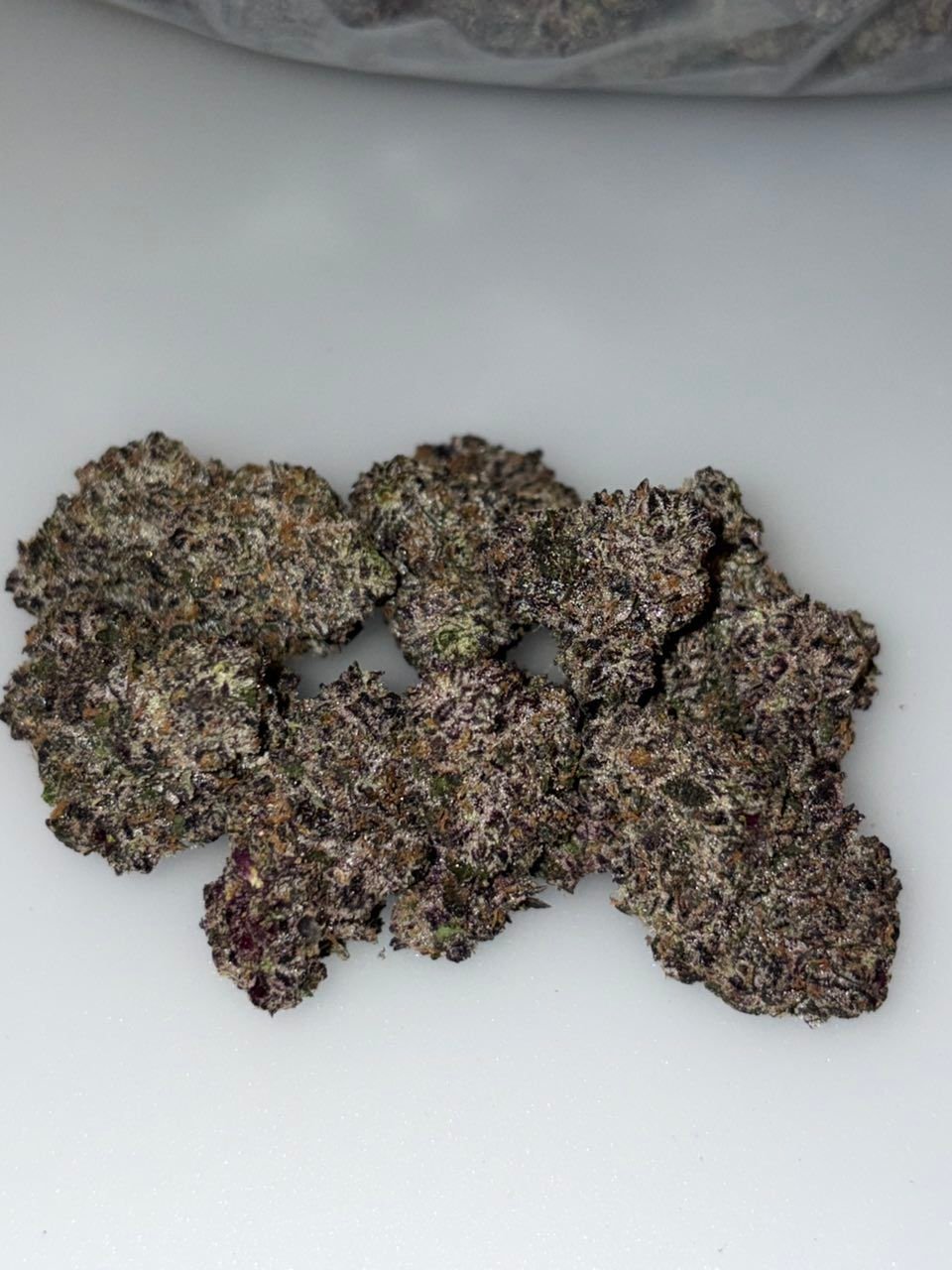
jolly rancher strain
Straight candy nose sweet berry syrup, tropical fruit candy, and a creamy grape like sweetness with a light funky gas underneath. When you crack the buds open, the candy gets even louder, bringing out fruity Runtz style sweetness with a smooth creamy finish. Dense, dark purple, heavily frosted buds with that loud candy shop aroma
Jolly Rancher Strain – Flavor, Genetics, Effects & Strain Information
The Jolly Rancher strain is a name that appears across cannabis databases and product markets, but it is important to understand that the name is not always used for exactly the same genetics. Some references identify Jolly Rancher with Route 66, while other modern listings use closely related or similarly named cultivars such as Jelly Rancher or Hella Jelly. Because of this naming overlap, characteristics such as THC percentage, genetics, terpene concentration, and effects can differ between growers and products.
For consumers researching Jolly Ranchers weed strain information, the appeal is generally associated with sweet, fruity aromas, colorful flowers, and a range of reported euphoric, focused, relaxing, or uplifting effects. Product-specific laboratory testing remains the most reliable way to determine the cannabinoid and terpene profile of a particular batch.
What Is the Jolly Rancher Strain?
The classic Jolly Rancher weed strain is commonly described as a hybrid cannabis variety. AllBud identifies one version, also known as Route 66, as a balanced hybrid and notes that its breeder and exact genetics are not clearly documented. Weedmaps similarly describes Jolly Rancher, or Route 66, as a slightly sativa-dominant hybrid with uncertain origins.
The name has also become associated with the more clearly documented Jelly Rancher strain, also known as Hella Jelly. Leafly describes Jelly Rancher as a sativa-dominant hybrid created by Humboldt Seed Company from Very Cherry and Notorious THC.
That distinction matters when comparing cannabis strains, because two products carrying similar names may not have identical genetics or chemical profiles.
Jolly Rancher vs. Jelly Rancher
| Feature | Jolly Rancher / Route 66 | Jelly Rancher / Hella Jelly |
|---|---|---|
| Classification | Hybrid; reports vary | Sativa-dominant hybrid |
| Genetics | Exact parentage uncertain in several references | Very Cherry × Notorious THC |
| Flavor descriptions | Berry, earthy, sour, sweet | Berry, strawberry, citrus, apple |
| Reported effects | Euphoric, focused, creative, relaxing | Happy, euphoric, focused, uplifting |
| Dominant terpene information | Varies by source/product | Caryophyllene commonly reported |
| THC information | Reports vary substantially | Leafly lists 20% THC as a reference figure |
| Breeder | Not clearly documented for classic Route 66 | Humboldt Seed Company |
The figures above are reference information rather than a guarantee for every flower sold under these names.
Jolly Rancher Strain Genetics
One of the most interesting aspects of the original Jolly Rancher name is the uncertainty surrounding its lineage. AllBud states that the genetics of its Route 66/Jolly Rancher entry are unknown because of breeder secrecy. Weedmaps likewise describes its history as unclear and notes that some sources have proposed different parent combinations.
This is different from the Jelly Rancher strain, where the genetic background is much more clearly documented. Leafly lists Very Cherry and Notorious THC as its parents and identifies Humboldt Seed Company as the breeder.
Why Genetics Matter
Genetics can influence:
- Aroma and flavor
- Plant structure
- Flower appearance
- Cannabinoid production
- Terpene composition
- Reported subjective effects
- Flowering characteristics
Growing environment, harvesting, curing, storage, and phenotype can also influence the final characteristics of cannabis flower. For that reason, a strain name should be treated as a useful identifier rather than a guarantee of identical chemistry from one product to another.
Jolly Rancher Aroma and Flavor Profile
Sweet and fruity characteristics are a recurring theme in descriptions of the Jolly Rancher strain. AllBud describes one Jolly Rancher/Route 66 version with earthy berry flavors and sour-pine notes, while Weedmaps reports sweet and sour grape characteristics with citrusy notes.
For Jelly Rancher, Leafly lists berry, citrus, and apple among the top flavors and identifies caryophyllene as the dominant terpene, followed by myrcene and humulene.
This creates a flavor profile that can range from candy-like fruit and berry notes to sharper citrus, sour, earthy, or spicy undertones.
Commonly Reported Flavor Notes
- Berry
- Strawberry
- Cherry
- Citrus
- Apple
- Sweet candy
- Sour fruit
- Grape
- Earthy notes
Actual flavor can vary considerably depending on the specific cultivar, phenotype, cultivation method, curing process, and storage conditions.
Jolly Rancher Strain Effects
Reported effects depend heavily on which Jolly Rancher cultivar is being discussed. For the Jelly Rancher strain, Leafly users commonly report feelings such as happiness, euphoria, and focus, with the database categorizing the strain as mostly energizing.
Descriptions of the classic Jolly Rancher/Route 66 variety are less consistent. AllBud reports an immediate euphoric head effect accompanied by focus and creative motivation, while other references describe a warmer body-oriented experience.
Because subjective cannabis effects differ between individuals, these descriptions should be viewed as reported experiences rather than guaranteed outcomes.
Jolly Rancher Strain Chart
| Category | Information |
|---|---|
| Strain name | Jolly Rancher |
| Alternate name | Route 66 in some databases |
| Related name | Jelly Rancher / Hella Jelly |
| General type | Hybrid |
| Jelly Rancher genetics | Very Cherry × Notorious THC |
| Classic Jolly Rancher genetics | Not consistently documented |
| Common flavor family | Sweet, fruity, berry, sour |
| Common aroma family | Fruity, berry, citrus, earthy |
| Reported effects | Euphoric, happy, focused, uplifting, relaxing |
| Jelly Rancher dominant terpene | Caryophyllene |
| Other reported terpenes | Myrcene, humulene |
| Cannabinoids | Vary by cultivar and batch |
| Best source for current potency | Product-specific laboratory test |
Leafly currently lists Jelly Rancher at 20% THC, while other Jolly Rancher references report different THC ranges. This illustrates why consumers should check the laboratory results for the specific product rather than relying solely on a strain-name database.
What Makes Jolly Rancher Stand Out?
The name Jolly Rancher weed strain naturally brings candy-like expectations, and many descriptions emphasize sweet, sour, and fruity characteristics. Leafly’s coverage of Jolly Rancher similarly highlights its sour-candy aroma and colorful, resin-covered flowers.
Depending on the cultivar, flowers may display dense structures, orange pistils, and prominent trichome coverage. However, visual characteristics are not a reliable substitute for laboratory testing when evaluating potency or cannabinoid content.
Key Characteristics at a Glance
- Fruity and candy-inspired aromatic profile
- Berry and sour notes commonly reported
- Hybrid characteristics
- Different genetic interpretations depending on the source
- Jelly Rancher has documented Very Cherry × Notorious THC genetics
- Caryophyllene is reported as the dominant terpene in Jelly Rancher
- Effects commonly described as happy, euphoric, focused, or uplifting
- Potency varies between products and batches
Choosing Between Similar Cannabis Strains
When researching cannabis strains, comparing the product label with independent laboratory information is more useful than relying only on a familiar strain name. Look for cannabinoid percentages, terpene information, harvest or packaging dates, and producer information where available.
For Jolly Rancher in particular, checking whether a listing refers to Route 66, Jolly Rancher, Jelly Rancher, or Hella Jelly can help prevent confusion. These names are sometimes used interchangeably online even though the documented genetics are not necessarily the same.
Frequently Asked Questions
Is Jolly Rancher the Same as Jelly Rancher?
Not necessarily. Some sources use Jolly Rancher as another name for Route 66, while Jelly Rancher, also known as Hella Jelly, is a separate documented cultivar from Humboldt Seed Company with Very Cherry and Notorious THC genetics.
What Does Jolly Rancher Taste Like?
Reported profiles commonly include berry, sweet fruit, sour fruit, grape, citrus, and earthy notes. The exact flavor depends on the cultivar and batch.
What Is the Jolly Rancher Weed Strain Type?
It is generally described as a hybrid, although the exact indica-to-sativa classification varies between references. Jelly Rancher/Hella Jelly is described by Leafly as a sativa-dominant hybrid.
What Is the THC Level?
There is no single THC number that applies to every product called Jolly Rancher. Different databases and products report different values. A product-specific certificate of analysis or laboratory-tested label is the appropriate source for current potency.
Are Jolly Rancher and Route 66 the Same?
Some cannabis databases identify Route 66 as another name for Jolly Rancher. However, strain naming is not standardized across the cannabis industry, so the producer and laboratory information should be checked for a particular product.
Final Thoughts on the Jolly Rancher Strain
The jolly ranchers strain name covers a fascinating but somewhat confusing part of cannabis strain terminology. Classic Jolly Rancher/Route 66 references have uncertain genetics, while Jelly Rancher/Hella Jelly has a better-documented lineage and a distinct profile associated with Very Cherry and Notorious THC.
For anyone researching this family of cannabis strains, the most useful approach is to look beyond the name. Compare the producer, genetics, cannabinoid results, terpene profile, and laboratory testing for the exact product. This provides a much clearer picture of what is actually in a particular batch than relying on a strain name alone.
Cannabis laws and regulations vary by location. Information about a strain should not be treated as medical advice, and product-specific laboratory testing is the best source for verified cannabinoid and terpene information.
| Quantity | 14G, OZ, QP, HP, P |
|---|
Related products
-
 Select options This product has multiple variants. The options may be chosen on the product page
Buy Snooze Pillows Weed – Premium Flavor & Smooth Effects
Price range: $40 through $1,500 -
 Select options This product has multiple variants. The options may be chosen on the product page
LA Pop Rocks x Mimosa weed strainn
Price range: $50 through $2,100 -
 Select options This product has multiple variants. The options may be chosen on the product page
Buy Platinum Cherries Strain – Loud Cherry Terps, Heavy Hit
Price range: $40 through $1,300 -
 Select options This product has multiple variants. The options may be chosen on the product page
Wagyu Strain CAFE
Price range: $52.50 through $3,100
Reviews
There are no reviews yet.